How a shared family kiosk makes chores visible — and the whole day easier
The exhausting part of chores usually isn't the chores. It's that the entire list lives in your head, and you're the only one who can see it. A shared family kiosk moves that list out where everyone can read it — so the day runs on what's on the screen instead of on you remembering.
By Jon Horton ·
By nine in the morning I already had the whole day loaded in my head.
Who had piano. Who hadn't fed the dog yet. Which kid was supposed to switch the laundry, and whose turn it was for the dishwasher, and the fact that the bathroom trash was starting to be a problem. None of it was written anywhere. It was all just running in the background of my brain, the way a browser with forty tabs open keeps a laptop warm.
That's the part that wears you out. Not the chores themselves — the chores take a few minutes each. It's that you're the only one who can see the list. So all day you're the lookup service, the reminder, the one who notices. The work of doing the chores is small. The work of holding the chores is the thing that leaves you tired at six o'clock with no idea what you actually did.
The problem isn't the list. It's where the list lives.
Here's what finally shifted it for me.
When the whole day exists only in a parent's head, the family can only run at the speed of that parent. Nobody else can start a thing, check a thing, or take responsibility for a thing, because nobody else can see it. Ask a kid what needs doing and the honest answer is "I don't know" — not because they're dodging, but because the information genuinely isn't available to them. It's in you.
Think about what that means in practice. Every single task has to route through your mouth. Wake up, empty the dishwasher, no not you, her, yes now, did you feed the dog, the dog, it's on your list. You're not managing a household so much as reading it aloud, one item at a time, all day, from memory.
That's not a discipline problem in your kids. It's a visibility problem in the house. And you can't fix a visibility problem by trying harder to remember — remembering more is the trap, not the way out.
Put the day on a screen everyone walks past
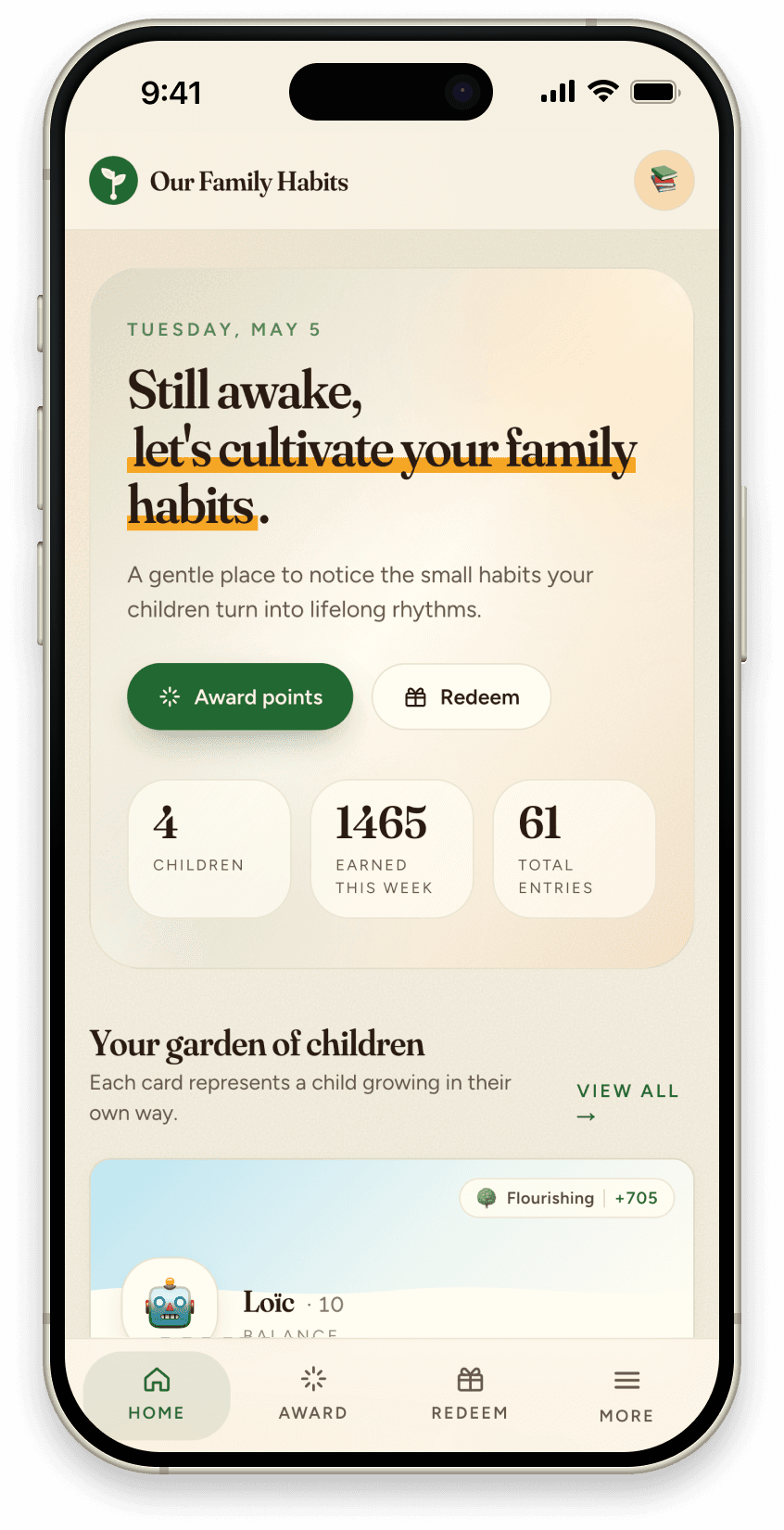
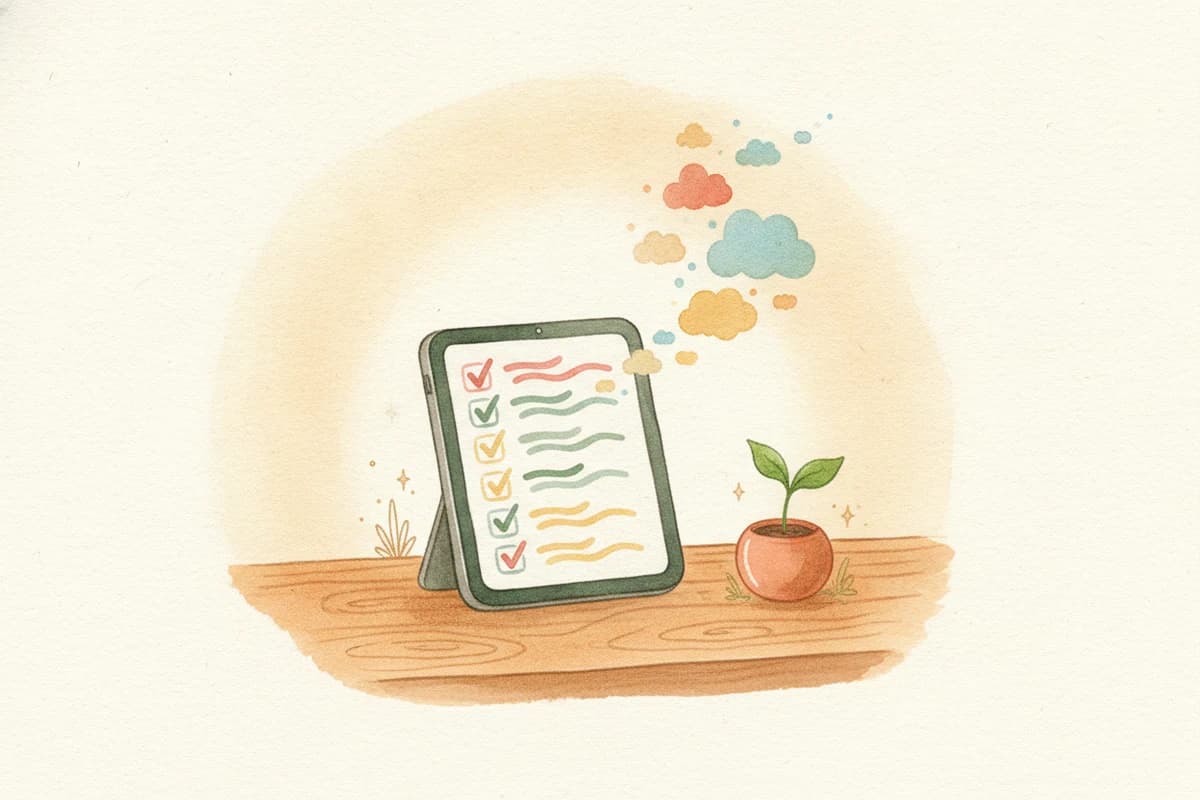
A kiosk is exactly this move, made concrete. You take a spare tablet, stand it up somewhere the family already passes — the kitchen counter, the shelf by the back door — and it shows the day. Each kid's name. The actions they can do. What's been done and what hasn't.
Now the list isn't in your head. It's on the wall.
That one change does more than it sounds like it should.
- The question "what am I supposed to do?" has an answer that isn't you. A kid walks past, looks, and sees their own jobs sitting there. No ask, no reminder, no negotiation about whether it's really required today. The screen doesn't have a mood. It just shows what's true.
- "Is it done?" becomes something anyone can check. You don't have to walk to the bedroom to verify the bed got made. Nobody does. It's tapped on the kiosk or it isn't, and the whole family — including the kid — can see the same picture.
- Effort lands somewhere visible. Finishing a job earns points; points build toward rewards the kids actually chose. The reason to do the thing stops being "because I said so" and starts being something the kid can watch climb on their own.
None of that requires you to be more organized. It requires the day to be visible to more people than just you.
Why "just make a chore chart" usually doesn't hold
Plenty of us have tried the paper version. A whiteboard, a printed grid, a sticker chart on the fridge. It works for about a week and a half, and then it quietly dies.
It's worth being specific about why, because the failure isn't laziness.
A paper chart is only as current as the last time someone updated it — and the someone is you. So the chart drifts out of date, the kids stop trusting it, and within days you're back to reading the day aloud from memory while a dead chart hangs on the fridge as decoration. The chart didn't move the mental load off of you. It just added maintaining the chart to the pile.
A live kiosk stays current because the family updates it by using it. A kid taps a job done and it's done — on the screen, for everyone, instantly. The record keeps itself. That's the difference between a picture of your system and the system actually running. We wrote more about that shift in why sticker charts stop working — the short version is that the chart has to be alive, or it becomes one more thing you're carrying.
What an easier day actually feels like
The change isn't dramatic on any single morning. It's quiet, which is the point.
You stop being interrupted every few minutes to answer a logistics question. The kids start checking the screen before they come find you, and a lot of the time they don't need to come find you at all. The dishwasher gets emptied because it's on the kiosk and it's that kid's, not because you tracked them down at the exact moment you remembered. The day starts running on what's visible instead of on your attention.
And the mental tabs close. That's the piece that surprised me most. When the list lives on the counter, you're allowed to stop holding it. You can be in a conversation without half your mind running inventory. The household keeps moving without routing every step through your memory — which is what "an easier day" really means. Not fewer chores. Less of you required to make the same chores happen.
That easier day also compounds. When the same things are visible in the same place every morning, the kids stop asking whether today is different, the routine settles, and the habits start to take on their own — predictability builds the habit, and the habit deepens the predictability. The structure does the remembering, so you don't have to.
Where to start
You don't need a fancy setup, and you don't need a big house. The move is small: get the day out of your head and onto something the whole family can see.
- Pick three or four actions that genuinely matter in your home, and start small — one habit, awarded generously, then add from there once it's holding.
- Stand a spare tablet somewhere everyone already walks past, so the list is visible instead of living in your voice. Our 10-minute kiosk guide walks through turning any old tablet into that hub.
- Let the kids do the tapping. The point is that the record keeps itself, so you're not the one maintaining it — you're just the one who set it up.
Then notice, a few days in, how much of the day is now running without you narrating it. That quiet is the mental load leaving your head and moving onto the counter, where the whole family can carry it together.
You can start with Our Family Habits free and put the day on the wall this week — so the next morning isn't a list you're holding alone. It's just something everyone can see.