The $0 family command center: turn a spare tablet into your household's home base
Smart family displays want $300–$600 plus a subscription to put your family's day on the kitchen wall. The tablet in your junk drawer does the job free—chores, routines, and rewards included. Here's the honest comparison and the 20-minute setup.
By Jon Horton ·
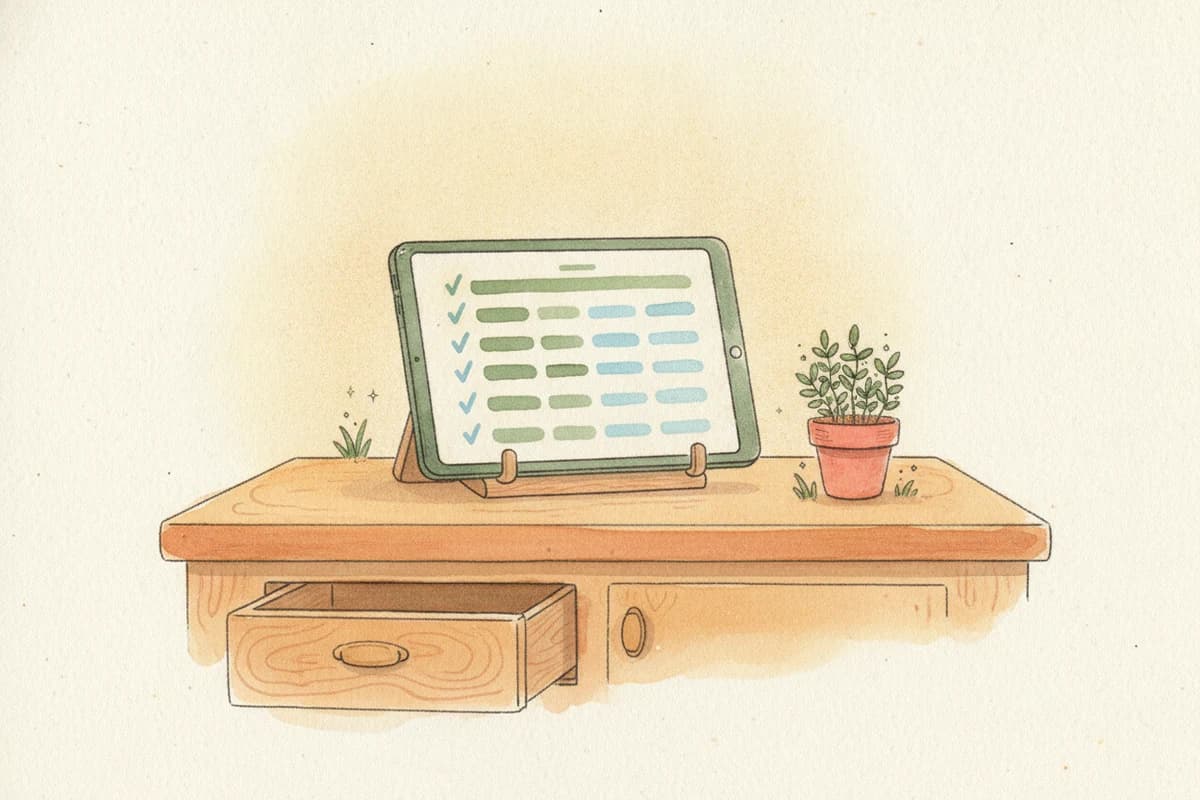
Somewhere in your house there's a drawer with an old tablet in it. Outdated enough that nobody fights over it, functional enough that you never threw it out.
That drawer is holding a family command center. Most people just haven't turned it on yet.
The command-center idea is having a moment—Pinterest walls of clipboards and cork, and at the high end, a wave of smart family displays: beautiful wall-mounted screens showing the family's calendar, chores, and routines, for $300–$600 up front plus $5–$10 a month, forever. The instinct behind all of it is exactly right. The price tag is not required.
Why a command center works at all
It's worth being precise about this, because the why determines what you actually need to buy (spoiler: probably nothing).
A command center works because it makes the family's day ambient—visible in shared space, all day, to everyone, without anyone asking. That single property is doing all the lifting:
- Kids can't act on expectations they can't see. Put the day where they eat breakfast and some of it starts happening unprompted.
- Status stops requiring interrogation. A glance shows what's done and what isn't—no "did you ever...?" prompts, no tone.
- The rules stop living in a parent. The screen is the referee, which is the whole game.
Notice what's not on that list: a bezel, a wall mount, a proprietary OS. Ambient visibility is a placement decision, not a hardware category. This is the core of what we mean by a family operating system—and it runs fine on hardware you already own.
The honest comparison
Credit where due: the premium displays are polished, the calendar views are lovely, and if you have money to burn on a beautiful object for the kitchen wall, they aren't a scam. But line up what you're actually buying:
| Smart display | Spare tablet + Our Family Habits | |
|---|---|---|
| Hardware | $300–$600 | The drawer tablet ($0) |
| Subscription | ~$60–$120/yr, required | Free plan, no card |
| Chores & routines | Yes | Yes, per kid, with approval queue |
| Rewards | Varies, often chore-cash | Points → rewards you define |
| Kid interaction | Look at it | Tap their own tasks done, kiosk mode |
| If it breaks | Proprietary device | It's a tablet; grab another |
The deeper difference is the model. A display is something the family watches. A kiosk is something the family runs—each kid tapping off their own morning list, points landing, streaks building. The habit formation happens in that interaction, not in the glancing. A screen kids only look at is a very expensive chore chart; we've written about why static charts fade by week three.
The 20-minute setup
- Resurrect the tablet. Almost anything from the last eight years works—Our Family Habits runs in the browser, no app store required. Factory-reset if it's cluttered.
- Create your family and add the day. Sign up free, add each kid, and load their real routines—morning, after school, evening. Fifteen minutes, once. (Full walkthrough: setting up a family kiosk.)
- Flip on kiosk mode. One shared screen, every kid's day, no logins for little hands to fumble—built for exactly this.
- Place it where the family collides. Kitchen counter, a cheap stand, charger tucked behind. Placement is the feature—a command center in a bedroom is just a tablet again.
- Route the follow-through into it. Points for completed tasks, a reward shelf kids care about, approvals on your phone. Now the whole loop runs at the counter without you narrating it.
The one thing the expensive version can't fix
Whichever way you go, know what a screen can and can't do. Making the day visible removes the friction—the forgetting, the nagging, the status-checking. It doesn't install the want-to. That comes from the loop running week after week: seen expectations, honest completion, rewards that fit your family, identity forming underneath. Hardware can't buy that. Rhythm builds it.
Which is exactly why we'd rather you spend $0 finding out.
One step
Open the drawer. Charge the tablet tonight.
Tomorrow, set up Our Family Habits free—no card, twenty minutes—and put your family's day on the counter where everyone can see it. The command center was never the screen. It's the seeing.